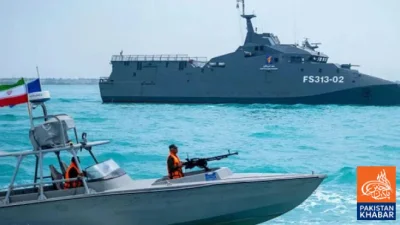
Washington (Monitoring Desk) – U.S. President Donald Trump has appealed to countries around the world to send their naval warships alongside the United States to keep the strategic Strait of Hormuz open and secure. However, so far, no country has explicitly agreed to this proposal.
Trump stated on his social media platform that South Korea, Japan, France, China, and the United Kingdom should participate in this initiative, as their economies also depend on oil supplies from the Gulf.
This statement comes amid rising global oil prices due to the ongoing tensions and potential conflict between the U.S. and Iran. Following U.S. and Israeli attacks, Iran has restricted passage through the Strait of Hormuz, affecting global trade and energy transit.
According to a British newspaper, the United Kingdom has refused to send naval warships to the Strait, with British Prime Minister Starmer declining Trump’s request. Japan, Australia, and France have also refused to dispatch ships.
Iranian Foreign Minister Abbas Araghchi stated that several countries have contacted Iran regarding safe passage for their vessels, but the final decision will be made by the Iranian military. According to Indian Foreign Minister S. Jaishankar, after negotiations between New Delhi and Tehran, two Indian-flagged gas tankers were allowed to pass through Hormuz.
Globally, reactions to this plan have been cautious. German Foreign Minister Johann Wadephul said that Germany does not want to be part of any new military operations.
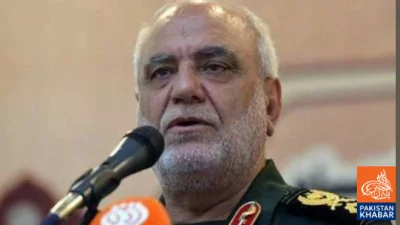
Meanwhile, Ali Mohammad, spokesperson for Iran’s Revolutionary Guard, challenged the U.S. President, stating that if America believes Iran’s navy has been destroyed, it should send its ships into the Persian Gulf and see for itself.
Reports indicate that since the start of hostilities, at least ten oil tankers have been attacked or targeted, and roughly a thousand vessels are stranded along the Hormuz route, creating major risks for the global energy market and maritime trade.